

Across the Greater Toronto Area (GTA), one of the most significant trends in residential development is the shift toward transit-oriented communities.
Rather than building housing in car-dependent locations, developers and municipalities are increasingly concentrating growth around major transit hubs, subway extensions, GO stations, and light rail corridors. For TRREB Member REALTORS®, this shift is changing how buyers compare neighbourhoods, how sellers position their properties, and how market value is understood in communities connected to rapid transit.
For homebuyers, proximity to reliable public transit is far more than a convenience. It is now a critical factor influencing property values, commute times, lifestyle choices, and long-term investment potential. TRREB Member REALTORS® play an important role in helping clients evaluate these factors, including station access, future transit timelines, commuting options, walkability, housing type, and the resale potential of transit-connected homes. As a result, some of the GTA’s most notable residential developments of the last decade – and many of the projects now under construction – have been strategically planned around higher-order transit infrastructure.
Vaughan Metropolitan Centre: A Model for Transit-Oriented Growth
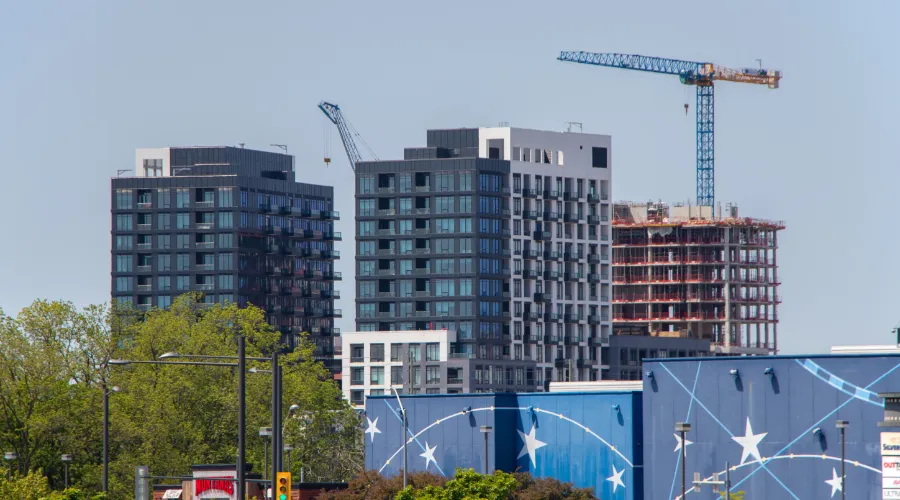
One of the GTA’s most successful examples is the Vaughan Metropolitan Centre (VMC). Prior to the extension of Toronto’s Line 1 subway into Vaughan, the area was largely characterized by commercial and industrial uses. The arrival of rapid transit transformed the district into a high-density urban centre featuring thousands of condominium units, office buildings, retail spaces, and public amenities.
For buyers, the VMC demonstrates how transit access can expand lifestyle choices beyond Toronto’s core while still supporting regional mobility. For sellers, it shows how proximity to rapid transit can become a key listing attribute in a competitive market. Condos in the area are specifically marketed around their direct access to the VMC subway station, demonstrating how transit investment can influence buyer demand, pricing expectations, and long-term neighbourhood appeal.
Yonge and Eglinton: Intensification Along Established Transit Corridors

Midtown Toronto is one of the region’s most recognizable examples of transit-oriented residential development. The Yonge and Eglinton area experienced substantial condominium growth over the past two decades because of its access to both Line 1 subway service and the recently opened Eglinton Crosstown LRT.
The Crosstown’s 25-station corridor was designed to improve connectivity across Toronto and link residents to subway, bus, and GO services. The line significantly increases transportation options while supporting ongoing residential intensification along Eglinton Avenue. For TRREB Member REALTORS®, the area illustrates how transit can affect buyer search behaviour, neighbourhood comparisons, and conversations about long-term value in established urban markets.
East Harbour: Toronto’s Next Major Transit Community
Looking ahead, few projects illustrate the real estate impact of transit-oriented development more clearly than East Harbour.
Currently under construction, the East Harbour Transit Hub will connect the Lakeshore East and Stouffville GO lines with the future Ontario Line, creating one of the most important transit interchanges in the region. The hub is expected to accommodate approximately 100,000 daily riders and will be integrated into a 38-acre transit-oriented community.
Residential development is a central component of the broader vision. Infrastructure Ontario’s plans include more than 4,000 residential units alongside commercial, retail, cultural, and public spaces.
For prospective residents, East Harbour represents the next generation of urban planning, where housing, employment, and transportation are intentionally integrated to create a complete community. For TRREB Member REALTORS®, emerging communities like East Harbour also require a more consultative approach with clients, including helping buyers understand pre-construction timelines, future transit delivery, neighbourhood evolution, and the trade-offs between current amenities and long-term growth potential.
Communities Emerging Along the Ontario Line

The Ontario Line is expected to become one of the GTA’s most transformative transit projects, and housing development is already following its route. The Provincial Transit-Oriented Communities program is focused on creating high-density mixed-use neighbourhoods connected to major transit stations, including those along new subway and GO corridors.
Areas such as Corktown, East Harbour, Thorncliffe Park, Flemingdon Park, and the Exhibition district are attracting increased development interest as plans advance for new stations. The expectation of faster travel times and improved regional connectivity is helping shape future residential investment decisions years before trains begin operation. These areas also reinforce the need for TRREB Member REALTORS® to stay informed about planning decisions, construction timelines, municipal approvals, and infrastructure investments that can influence both buyer confidence and seller expectations.
Mississauga’s Transit-Focused Evolution
Mississauga is also embracing transit-oriented growth. Major waterfront projects such as Brightwater in Port Credit are planned with access to GO Transit connections and regional transportation networks in mind.
At the same time, development activity along the forthcoming Hazel McCallion corridor and connections to the Eglinton Crosstown West Extension continue to support higher residential densities near rapid transit infrastructure. As regional transit links improve between Toronto, Mississauga, and surrounding municipalities, developers are increasingly targeting sites that offer residents alternatives to automobile commuting. For buyers priced out of some central Toronto neighbourhoods, these connected communities can offer more choice while maintaining access to employment, education, and services across the region.
TRREB Advocacy and the Real Estate Impact
Transit-oriented growth is also closely connected to TRREB’s broader advocacy work on housing supply, affordability, and development. TRREB has consistently advocated to all levels of government on issues that matter to buyers, sellers, renters, and TRREB Member REALTORS®, including housing supply, affordability challenges, taxation, transportation and transit, and intergovernmental planning.
Recent TRREB advocacy has focused on removing barriers that slow or add costs to new housing, including development charges, zoning restrictions, parking requirements near major transit stations, and the need for more missing middle and higher-density housing options. These priorities matter in a transit-oriented market because new homes near rapid transit must be financially viable, approved efficiently, and supported by infrastructure that keeps communities livable.
For TRREB Member REALTORS®, this advocacy supports the practical needs of clients. Buyers need more housing choice in locations that connect them to jobs and services. Sellers benefit from healthy market demand and confidence in the long-term appeal of their communities. Agents serving both groups must connect market advice with policy realities, helping clients understand how development charges, planning approvals, transit expansion, and housing supply affect affordability and availability.
The Future of GTA Housing

The relationship between housing and transit is only expected to strengthen over the coming decade. Provincial and municipal planning policies continue to encourage higher-density development near transit stations, while buyers increasingly prioritize walkability and connectivity.
Whether examining completed communities like Vaughan Metropolitan Centre, established hubs such as Yonge and Eglinton, or emerging projects like East Harbour and the Ontario Line corridor, a common theme is evident: transit is shaping where people choose to live, how listings market specific location advantages, and how TRREB Member REALTORS® advise clients in a changing regional market.
For the GTA housing market, this trend reflects more than infrastructure investment or development planning. It represents a long-term real estate shift toward communities that are more connected, sustainable, and responsive to the needs of buyers, sellers, and a growing region. As future transit projects move from planning to reality, the neighbourhoods built around them are likely to become some of the most closely watched residential destinations in the GTA.